




How Does Industrial Refrigeration Work? Operating Principle and Applications
Industrial refrigeration does not produce cold. Instead, it removes heat from products, machinery and industrial processes. It encompasses equipment, control systems and circuits responsible for maintaining the required temperature. A properly selected refrigeration system affects production quality, operational safety and energy consumption.
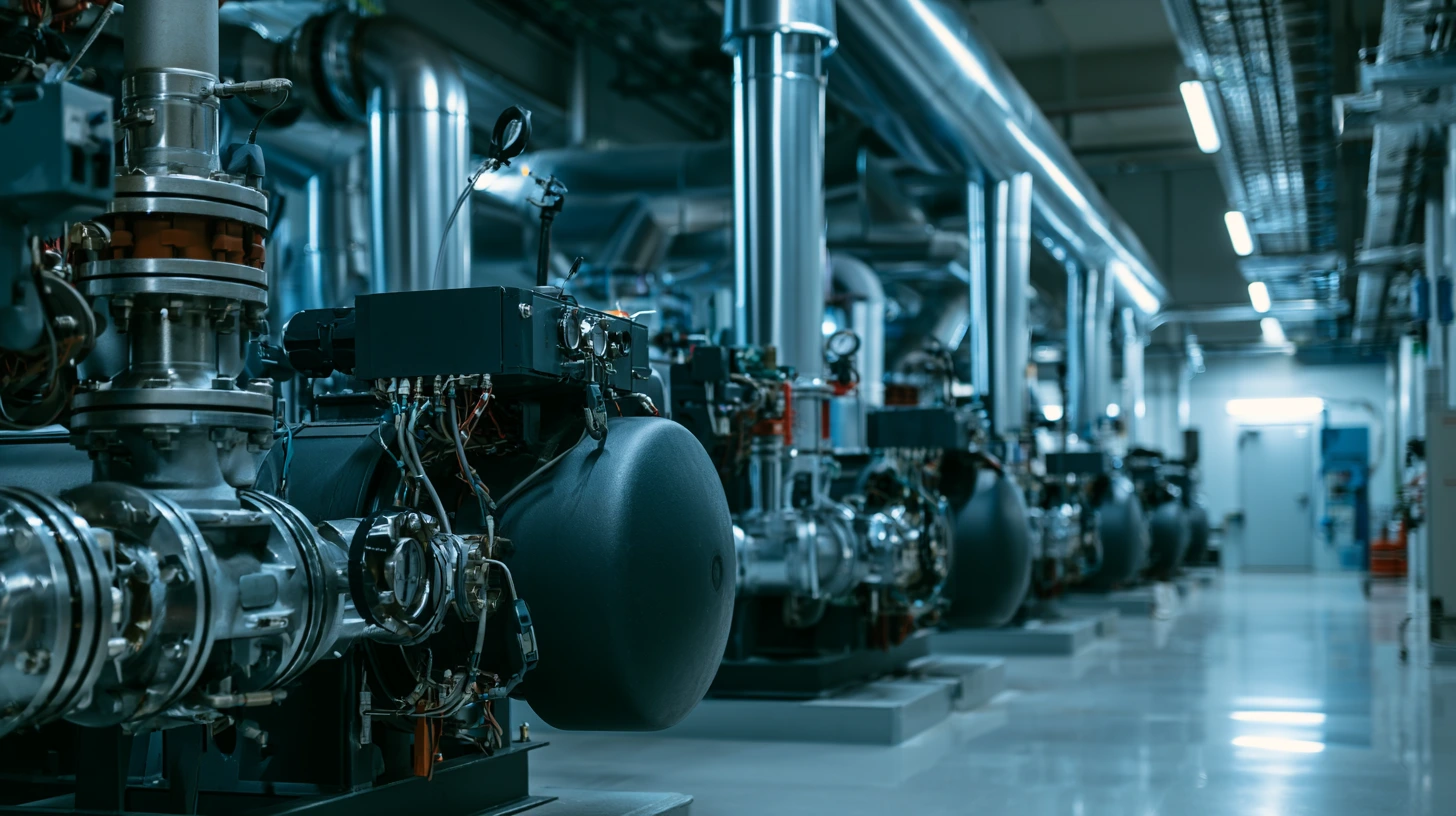
Cooling in Industry – How Do Refrigeration Systems Work?
Industrial refrigeration does not produce cold. It removes heat from a product, machine or process and then transfers it to the surroundings. The stability of the system affects product quality, production continuity and installation safety.
The basic operating principle is similar to that of a domestic refrigerator. An industrial cooling system, however, operates under significantly higher loads. It must also maintain specific parameters for many hours and often forms an integral part of an entire production line.
What Is Industrial Refrigeration?
Industrial refrigeration includes equipment and processes used for the controlled removal of heat. The object being cooled may be a product, raw material, air, liquid or production machine.
The purpose of the installation is to reduce the temperature or maintain it at the required level. The system transfers the absorbed heat to a location where it can be safely released. It is most commonly discharged into the ambient air or a cooling-water circuit.
The term covers both large freezer facilities and systems cooling individual machines. An installation may serve tanks, reactors, injection moulds or process fluids. Its industrial nature is determined primarily by its connection with a production process.
Industrial refrigeration is used during the production, storage and transport of many products. It is applied in food-processing, chemical and pharmaceutical plants, as well as logistics centres. Stable cooling also supports the optimisation of production processes by reducing downtime and fluctuations in operating parameters.
How Does Industrial Refrigeration Differ from Air Conditioning?
Air conditioning is primarily responsible for maintaining conditions in spaces occupied by people. It regulates temperature, humidity and air quality. Its main purpose is to provide comfort or suitable working conditions.
Industrial cooling, on the other hand, serves a product or technological process. It may maintain the temperature of a raw material, remove heat from a machine or stop a chemical reaction. A system failure may interrupt production and result in the loss of an entire batch.
Commercial refrigeration is most commonly used in shops, restaurants and smaller warehouses. It includes refrigerated counters, display cabinets, cold rooms and food-storage equipment. An industrial system usually serves a larger process or multiple heat-removal points.
What Can Be Cooled in an Industrial Plant?
The most obvious example is a food product. Reducing its temperature may slow spoilage, prepare it for storage or enable freezing. The installation must therefore take into account the required cooling rate and storage conditions.
Machines and equipment also require cooling. Motors, compressors, machine tools and moulds generate significant amounts of heat during operation. Effective heat removal helps maintain stable process parameters.
Precise process-temperature control is particularly important. Uneven cooling may impair material properties, alter product geometry or increase the number of rejected parts.
Process fluids are another important area. Water, oil, glycol or another fluid may transport heat between a machine and the refrigeration installation. This is how many systems using chilled water or a secondary cooling circuit operate.
Entire rooms may also be cooled. This applies to cold rooms, warehouses, freezer rooms and selected production areas. In each case, the temperature is selected according to the requirements of the product or process.
How Does Industrial Refrigeration Work?
The most commonly used installations are based on a vapour-compression refrigeration cycle. A refrigerant circulates inside a closed system, changing its pressure, temperature and physical state.
The cycle consists of four basic components: an evaporator, compressor, condenser and expansion valve. Each performs a different function. Their combined operation enables continuous heat absorption and removal.
The Evaporator Absorbs Heat
The cooling process begins in the evaporator. The refrigerant is present there at low pressure. It absorbs heat from air, a product, a liquid or a machine component.
Under the influence of heat, the refrigerant evaporates. It changes its physical state from liquid to gas. The temperature of the cooled medium gradually decreases.
The Compressor Increases Pressure
The gaseous refrigerant then enters the compressor. The compressor increases its pressure and, as a result, its temperature. This stage requires an external supply of electrical energy.
The compressor drives the entire refrigeration cycle. In large installations, its operation is controlled according to current demand. This helps reduce energy consumption under partial-load conditions.
The Condenser Releases Heat
The hot refrigerant flows from the compressor to the condenser. There, it releases heat to air, water or another medium. During this process, it changes back into a liquid.
The condenser removes both the heat absorbed from the process and the energy supplied by the compressor. The installation must therefore provide an effective method of transferring heat outside the cooled area.
The Expansion Valve Reduces Pressure
The liquid refrigerant then reaches the expansion valve. The valve reduces its pressure and temperature. This allows the refrigerant to return to the evaporator.
The entire cycle repeats continuously while the installation is operating. The control system adjusts equipment capacity according to temperature, pressure and process load.
What Components Make Up an Industrial Cooling System?
A basic refrigeration cycle requires four principal components: an evaporator, compressor, condenser and expansion valve. Industrial installations are usually more complex.
Additional components are responsible for refrigerant transport, capacity control and safe operation. Their selection depends on system capacity, operating temperature and the type of process being cooled.
Basic Refrigeration Equipment
The evaporator absorbs heat from a product, air or process fluid. The compressor ensures refrigerant circulation and increases its pressure. The condenser releases the accumulated heat outside the cooled area.
The expansion valve controls the quantity of refrigerant entering the evaporator. It also reduces the refrigerant pressure before the next cycle begins. The combined operation of these devices forms a closed refrigeration circuit.
| System component | Main function |
|---|---|
| Evaporator | Absorbing heat from the product or process |
| Compressor | Increasing pressure and forcing refrigerant circulation |
| Condenser | Releasing heat to the surroundings |
| Expansion valve | Reducing refrigerant pressure |
| Control system | Regulating and monitoring installation operation |
Pumps, Vessels and Heat Exchangers
Large refrigeration systems also use pumps, vessels and separators. These components stabilise flow and enable the refrigerant to be stored safely. The installation may also include oil separators and liquid receivers.
Heat exchangers transfer energy between two media. They may separate the refrigerant from water, glycol or brine. This solution is used, among other applications, in indirect cooling systems.
The design of the installation also depends on the method used to supply refrigerant to the evaporators. Direct-expansion, flooded and pumped-liquid recirculation systems are used. Each solution requires different control methods and equipment.
Automation and Control Systems
The automation system adjusts cooling capacity to the current load. It measures temperature, pressure, flow and liquid level. Based on these readings, it controls compressors, pumps, fans and valves.
The system may also detect deviations and trigger alarms. This makes it possible to identify reduced capacity or abnormal pressure more quickly. Similar solutions support the monitoring of machine operating parameters throughout the plant.
A well-designed control system limits frequent compressor starts. It also helps maintain a stable temperature without major fluctuations. This is important for product quality and energy consumption.
Direct and Indirect Cooling Systems
Heat may be absorbed directly by the refrigerant. It may also be transported using an additional liquid as an intermediate medium. The selected solution affects installation design, safety and efficiency.
Direct Cooling
In a direct system, the evaporator is in contact with the air or medium being cooled. The refrigerant evaporates close to the product or process. A separate secondary-fluid circuit is not required.
This solution may reduce the number of heat exchangers. It also eliminates the need for an additional circulation pump. However, refrigerant piping must be routed to each heat-removal point.
Direct systems are used, among other applications, in cold rooms. The evaporator cools the air circulating around the stored products. The exact design depends on the refrigerant and the method used to supply it.
Indirect Cooling
In an indirect system, the refrigerant cools an additional medium. This may be water, a glycol mixture or brine. The medium then circulates to machines, tanks or air coolers.
The refrigerant remains within a separate part of the installation. Pipes carrying the secondary fluid are routed to the individual consumers. This reduces the quantity of refrigerant circulating throughout the plant.
A secondary circuit requires a pump and an additional heat exchanger. This introduces additional energy losses and more components requiring maintenance. Its advantage, however, is that the main refrigeration installation can be more easily separated from production areas.
When Is a Secondary Circuit Used?
A secondary circuit is suitable when there are multiple heat consumers located far apart. It is also used when the refrigerant should not be routed into the production hall. One example is a chilled-water installation supplying several production lines.
This solution may also make future system expansion easier. Additional heat exchangers or machines can be connected to the common circuit. Pump capacity and increasing flow resistance must, however, be taken into account.
At low temperatures, water must be replaced with a suitable medium. Glycol or brine with a lower freezing point is then used. The type and concentration of the fluid are selected according to the operating conditions.
Where Is Industrial Refrigeration Used?
Industrial refrigeration is used wherever temperature affects a product or process. It is not limited to cold rooms and freezer facilities. It often operates directly alongside production machinery.
Food Industry
Food-processing plants cool raw materials, semi-finished products and finished goods. Temperature control helps limit microbial growth and quality deterioration. It is required during production, storage and transport.
Refrigeration installations are used in dairies, breweries, slaughterhouses and fish-processing plants, among other facilities. They are also applied when freezing vegetables and ready-made meals. Cooling parameters depend on the product and the required process speed.
In some processes, reaching a specific temperature is not sufficient. The rate at which heat is removed is also important. Cooling that is too slow may affect the structure or shelf life of the product.
Chemical and Pharmaceutical Industries
Chemical reactions often generate significant amounts of heat. A refrigeration installation helps maintain a safe reactor temperature. It may also be used to stop a process at a precisely defined point.
In pharmaceutical production, temperature control affects process repeatability. This applies, among other areas, to synthesis, fermentation and substance storage. Parameter fluctuations may alter the properties of an entire batch.
Centralised indirect systems are commonly used in chemical plants. Chilled water or brine is delivered to process heat exchangers. This allows multiple consumers to be supplied from a single installation.
Plastics Processing and Metalworking
Injection moulding machines require effective mould cooling. Heat removal affects cycle time and the dimensional accuracy of finished components. Uneven temperatures may cause deformation and dimensional problems.
In metalworking, spindles, oils and working fluids are cooled. A stable temperature reduces the thermal expansion of components. It also helps maintain accuracy during prolonged machine operation.
Lasers, furnaces and welding equipment also require cooling. The system removes heat from components exposed to high thermal loads. It protects them against overheating and premature wear.
Warehouses and Logistics Centres
Refrigerated warehouses maintain the conditions required for product storage. They may include several zones operating at different temperatures. Each zone requires separate measurement and control.
Large facilities use centralised installations with multiple evaporators. Their load changes when doors are opened or goods are received. The system must respond to these changes without major temperature fluctuations.
Effective insulation of walls, ceilings and doors is also important. It reduces heat and moisture infiltration. As a result, the installation operates under a lower load.
Which Refrigerants Are Used in Industry?
A refrigerant transports heat within an installation. Its properties affect operating pressure, capacity and equipment design. There is no single refrigerant suitable for every plant.
When selecting a refrigerant, the operating-temperature range and required capacity must be considered. Safety, equipment availability and environmental impact are also important. The decision should cover the entire service life of the system.
Ammonia R717
Ammonia has been used in large industrial installations for many years. It is particularly common in the food industry and refrigerated warehouses. Its properties enable the construction of efficient, high-capacity systems.
R717 does, however, require appropriate safety measures. Ammonia is toxic and may present a hazard in the event of a leak. The installation must be operated by properly trained personnel.
Gas detection, ventilation and emergency procedures are essential. The correct selection of installation materials is also important. Safety requirements must be considered at the refrigeration-engine-room design stage.
Carbon Dioxide R744
Carbon dioxide is used as the main refrigerant or as part of a cascade system. It may also act as a heat-transfer medium. R744 systems are used in low-temperature installations.
Carbon-dioxide systems operate at high pressures. They therefore require appropriately selected equipment, valves and safety devices. The designer must consider the parameters occurring during both operation and shutdown.
R744 is not a universal solution. Its suitability depends on temperature, climate and system design. In some installations, it works together with ammonia in a cascade arrangement.
Synthetic Refrigerants
Synthetic refrigerants are also used in industrial installations. They dif